
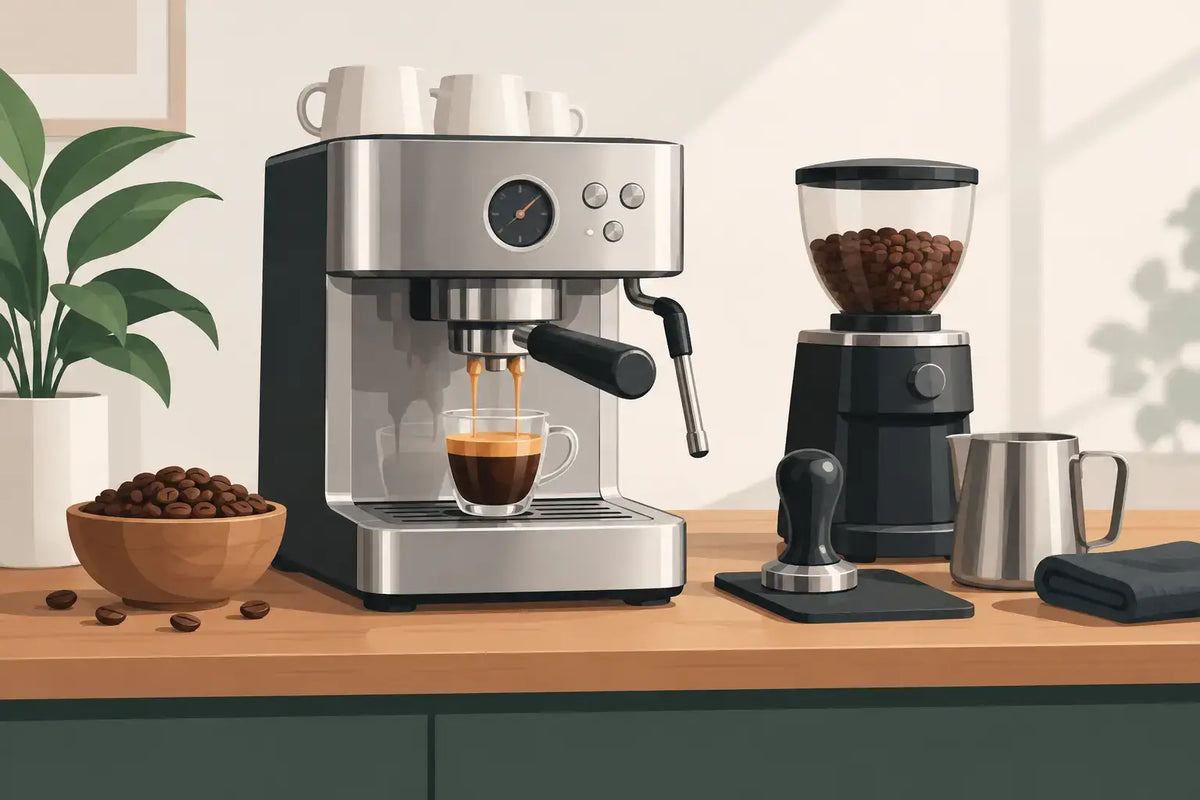
A great espresso does not begin when you press the button. It begins with the choices around it: the machine that fits your routine, the coffee that suits your palate, and a setup simple enough to use before a busy morning or when guests arrive. This home espresso setup guide is designed to help you build that ritual with confidence, whether you prefer the speed of capsules or the hands-on satisfaction of freshly ground beans.
Start With the Coffee Experience You Want
Before comparing machine features, decide what you want your daily cup to feel like. If your ideal coffee is a quick, consistent espresso with a rich crema and no measuring, a capsule machine offers a polished answer. It is particularly well suited to busy households, compact kitchens, and anyone who enjoys trying different intensities or flavored coffees without changing settings.
If you enjoy the aroma of beans being ground fresh and want more control over body, sweetness, and extraction, a bean-to-cup or traditional espresso setup may be more rewarding. This route asks for more attention, but it gives you the freedom to refine every cup. Neither option is automatically better. The right one is the one you will enjoy using every day.
For milk coffee drinkers, consider how often you make cappuccinos, flat whites, and lattes. A machine with automatic milk preparation is convenient for a household where several people want different drinks. A steam wand creates more room for technique and texture, but it also requires a little practice and regular cleaning.
Choose the Right Espresso Machine
The machine is the center of your setup, yet it should not dictate your entire kitchen. Begin with available counter space, water access, how many drinks you prepare at once, and how involved you want to be.
Capsule machines for effortless consistency
Capsule machines are a refined choice when speed, clean preparation, and reliable results matter most. Each portion is pre-measured, so there is no need to weigh coffee, adjust a grinder, or clear loose grounds from the counter. Select an espresso capsule for an intense after-dinner cup, or choose a longer coffee for a gentler morning ritual.
They also make entertaining easy. Guests can choose from different roast profiles or flavored varieties, and each drink can be prepared in moments. Look for a machine with the cup sizes you use most, a removable water tank, and a compact shape that works comfortably in your space.
Bean-to-cup machines for fresh-ground convenience
A bean-to-cup machine bridges convenience and craft. It grinds whole beans immediately before brewing, helping preserve the aromatic oils that give espresso its distinctive fragrance. Most models allow you to adjust strength, volume, and sometimes grind level, while automated rinsing programs reduce the daily effort.
This is often the best fit for homes that drink several coffees a day and want a fresh, café-style result without learning manual barista techniques. It does require attention to cleaning, descaling, and bean storage, but the reward is a fuller sensory experience at the touch of a button.
Manual machines for a more hands-on ritual
A traditional espresso machine offers the greatest level of control. You grind the beans, dose the portafilter, distribute the coffee, tamp it evenly, and judge the shot as it pours. The process can be deeply satisfying, especially for people who notice small differences in flavor and enjoy developing a skill.
The trade-off is consistency. A manual machine can produce exceptional espresso, but only when paired with a capable grinder and a willingness to practice. If that sounds like pleasure rather than work, this setup can turn a daily coffee into a personal ritual.
The Grinder Matters More Than Most People Expect
For whole-bean espresso, the grinder is not an accessory. It is one of the most influential parts of the setup. Espresso needs a fine, even grind so water can pass through the coffee at the right pace. A grinder that produces uneven particles can lead to shots that taste thin, harsh, sour, or bitter, even when the beans are excellent.
Choose a burr grinder rather than a blade grinder. Burrs grind coffee to a more uniform size and allow small adjustments that help you fine-tune extraction. Stepped grinders have set click positions and are straightforward to use. Stepless grinders provide more precise adjustment, which experienced home baristas may appreciate.
Grind only what you need just before brewing. Coffee begins to lose aromatic intensity after grinding, especially in warm kitchens. Store unopened coffee and daily-use beans in a cool, dry cupboard, away from direct sunlight and strong food aromas. Avoid the refrigerator, where moisture and odors can affect the beans.
Pick Coffee That Matches Your Taste
There is no single perfect espresso roast. The best choice depends on whether you prefer bright fruit notes, caramel-like sweetness, dark cocoa depth, or a bold, lingering finish. A medium to medium-dark roast is often an approachable starting point because it balances sweetness, body, and acidity well in espresso.
If you drink milk-based coffees, choose a coffee with enough intensity to remain present through milk. Rich chocolate, roasted nut, and spice notes tend to create a satisfying cappuccino or latte. For straight espresso, you may enjoy a more nuanced profile with gentle fruit or floral character.
Freshness matters, but so does resting time. Very freshly roasted beans can release excess gas and make extraction harder to control. Many coffees settle into a more reliable brewing window after a short rest. With capsules, freshness and portion protection are built into the format, offering an easy route to consistent flavor and aroma.
Essential Tools for a Home Espresso Setup
A thoughtful setup does not need to fill every drawer. Beyond the machine and grinder, start with a good tamper if your machine uses a portafilter, a small scale, a knock box, and a microfiber cloth. These are practical tools, not decorative extras.
A scale helps you repeat a successful recipe. For many double espressos, a useful starting point is around 18 grams of ground coffee yielding roughly 36 grams of liquid espresso in 25 to 30 seconds. Treat this as a reference, not a rule. Different coffees, baskets, and taste preferences will call for adjustment.
Use a pitcher sized for the amount of milk you normally steam. Stainless steel is durable and helps you feel the changing temperature as the milk warms. For capsule and automatic systems, keep the focus on maintenance supplies, a clean drip tray, and cups that suit your preferred drink size.
Dial In Your First Espresso
With a manual machine, begin with a simple, repeatable recipe. Dose the same amount of coffee each time, distribute it evenly in the basket, tamp level with steady pressure, and start the shot immediately. Watch the flow. Espresso should usually begin as a slow, dark stream before turning into a warm, honey-colored pour.
If the shot runs too quickly and tastes sour or weak, make the grind slightly finer. If it drips very slowly and tastes bitter or dry, make it slightly coarser. Change one variable at a time, then taste again. This patient approach is far more useful than making several adjustments at once.
Water also affects flavor. If your tap water tastes heavily chlorinated or mineral-heavy, filtered water can improve the cup and help protect the machine from scale buildup. Follow your machine's guidance for water filters and descaling intervals, especially in areas with hard water.
Make Milk Drinks With Balance
Milk should support espresso, not hide it. For a cappuccino, aim for silky milk with a lighter layer of foam. For a latte, create finer microfoam that blends smoothly into the coffee. Start with cold milk, purge the steam wand before use, and keep the tip near the surface briefly to introduce air before lowering it to create a whirlpool.
Temperature is the difference between sweet, creamy milk and a flat-tasting drink. Stop steaming when the pitcher feels hot but still manageable to hold briefly, generally before the milk becomes excessively hot. Clean and purge the steam wand immediately afterward. This protects flavor, hygiene, and machine performance.
Care Is Part of the Ritual
The most elegant setup is one that stays dependable. Empty grounds and rinse removable parts after use. Wipe the steam wand every time you prepare milk. Backflush compatible manual machines as recommended, and run cleaning cycles on automatic and capsule machines when prompted.
Descaling is equally important. Mineral deposits can slow water flow, affect temperature stability, and shorten the life of a machine. Use the recommended descaling product and schedule rather than waiting for a noticeable problem. Reliable performance comes from small, regular habits.
When selecting equipment, aftersales support and warranty coverage deserve the same consideration as finish and features. A quality machine is an investment in hundreds of future coffee moments, and dependable care keeps those moments enjoyable.
Your ideal setup does not need to imitate a busy café. It should make exceptional coffee feel natural in your home: a precise espresso before the day begins, a smooth latte in the afternoon, or a welcoming cup prepared with ease for someone you love. Choose the format that suits your rhythm, care for it well, and let every cup awake your senses.