
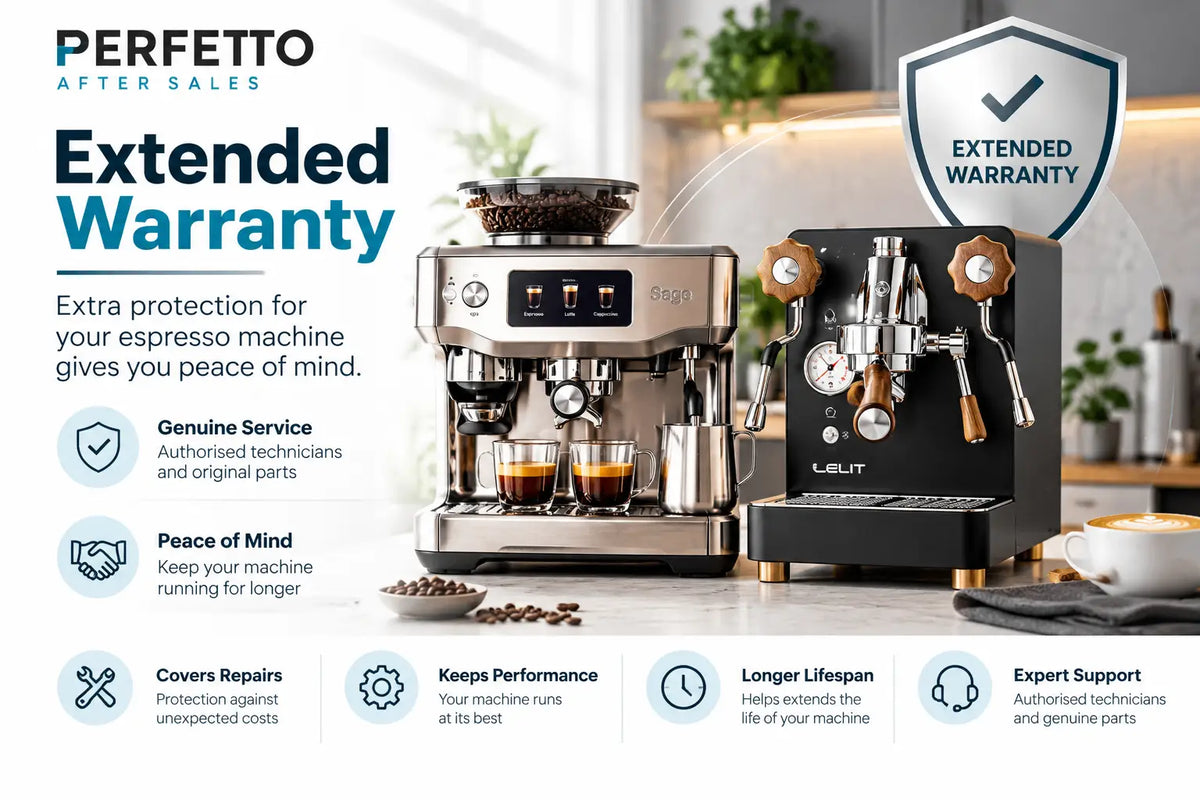
A premium espresso machine can make several coffees a day, heat water on demand, build pressure, manage electronics, and handle fine coffee particles in a compact space. An extended warranty for espresso machines is designed to reduce the cost and disruption when one of those systems develops a covered fault after the standard manufacturer warranty ends.
For many home baristas, the question is not whether a machine will ever need attention. It is whether the likely repair costs, the type of use, and the value of convenient specialist support justify buying additional protection. The right answer depends on the machine, its age, the water used, and how much you rely on it for your daily coffee.
What an extended warranty for espresso machines covers
An extended warranty generally continues protection beyond the original manufacturer warranty period. Its purpose is to cover eligible mechanical or electrical failures that occur through normal use, subject to the plan's terms and exclusions.
For an espresso machine, covered components may include the pump, boiler or thermoblock, solenoid valves, control board, heating elements, sensors, switches, and internal wiring. On grinder-equipped machines, coverage may also address relevant electrical or mechanical components. The exact list matters. A useful warranty should state clearly which machine types and parts it applies to rather than relying on broad wording.
Coverage is not the same as routine servicing. Consumable and wear items such as group gaskets, shower screens, water filters, grinder burrs, portafilter baskets, and cleaning tablets usually need periodic replacement as part of ownership. Damage caused by misuse, accidental impact, unauthorized repairs, power issues, or a lack of required cleaning may also fall outside warranty coverage.
This distinction is practical, not technical fine print. A machine that leaks because a group gasket has naturally worn may need maintenance. A machine that loses pressure because of an internal covered component failure may require a warranty repair. Ask how the plan treats both situations before making a decision.
Why repair costs can add up
Espresso machines are serviceable appliances, but diagnosing a fault correctly takes specialist knowledge. A weak coffee flow can be caused by scale, a blocked shower screen, a failing pump, an incorrect grinder setting, a valve issue, or a problem with the brew circuit. Replacing parts without accurate diagnosis can increase the final cost and leave the original issue unresolved.
The repair bill is not only about the component itself. It can include technical assessment, disassembly, testing, replacement parts, reassembly, calibration, and final checks. On premium domestic machines, an electronic board, heating system, or pump-related repair can be meaningfully more expensive than standard annual care products.
For owners who depend on their machine every morning, logistics also have value. A warranty supported by a specialist service center can reduce the effort of finding a suitable technician, transporting a heavy machine, and sourcing compatible parts independently. In the UAE, free collection and delivery can be particularly helpful for machines that are awkward to carry or package safely.
When extra coverage makes sense
An extended warranty is often most useful when you are buying a higher-value machine with several years of expected use ahead of it. This includes dual-boiler machines, heat-exchanger machines, premium bean-to-cup models, and machines with integrated grinders or sophisticated digital controls. More capable equipment offers better control and convenience, but it also contains more components that may require professional attention.
It can also suit owners who want predictable ownership costs. If an unexpected repair would be frustrating or would delay replacing another essential appliance, warranty protection can make budgeting simpler. The benefit is not that every machine will fail. It is that an eligible fault does not automatically become an unplanned expense.
Consider an extended warranty carefully if you are purchasing a pre-loved espresso machine. A properly graded and serviced machine can offer excellent value, but coverage terms may differ from those for a new model. Confirm the warranty duration, the machine condition covered at purchase, and whether the protection is attached to the specific serial number.
The case is stronger when the plan is administered through a provider that already works with the machine category. Perfetto After Sales supports the ownership lifecycle with equipment, compatible care products, specialist repair, and warranty options, which can make the process more direct if service is needed.
When you may not need it
An extended warranty is not automatically the best choice for every machine or every owner. It may offer limited value if the machine has a lower purchase price, the cost of the plan approaches a large share of replacement value, or you are likely to upgrade within a short period.
It may also be less compelling for an owner who maintains a repair reserve and is comfortable paying for a service when needed. Simple machines with fewer electronic features can sometimes be less expensive to diagnose and repair, although that depends on the model and the availability of parts.
Commercial use requires an even closer look. A domestic warranty may not apply to a machine used in an office, café, or hospitality setting. High-volume equipment faces different demands, including more frequent backflushing, water filtration checks, grinder maintenance, and preventive servicing. Businesses should use coverage designed for commercial operation and confirm expected response arrangements before relying on a warranty plan.
Check these terms before you buy
Do not judge a warranty by its duration alone. A three-year plan with narrow exclusions may be less valuable than a shorter plan with clear coverage, suitable service access, and a defined repair process. Read the policy before purchasing, especially if the machine is expensive or used frequently.
Look for answers to the following practical questions:
- When does the extended coverage begin: from the purchase date or after the manufacturer warranty ends?
- Which parts, labor, diagnosis, transport, and return delivery are included?
- Does the plan cover both electrical and mechanical failures?
- Are repairs completed with suitable, model-compatible parts?
- Is there a claim limit, service fee, or limit on the number of repairs?
- What maintenance records, water filtration, or cleaning requirements must be met?
- Does coverage remain valid if the machine moves to a new owner or address?
- Is business or commercial use excluded?
Warranty protection still depends on maintenance
A warranty helps with unexpected eligible failures. It does not replace the routine work that keeps coffee equipment operating within specification. Water quality is one of the most significant factors for espresso machines. Hard water can cause scale buildup inside boilers, valves, and water pathways, affecting heat performance, flow, and reliability.
Use the filtration method recommended for your machine and local water conditions. Replace filters on schedule, descale only according to the manufacturer's instructions, and avoid assuming that any household filter is suitable for espresso equipment. The wrong water treatment can create as many problems as untreated water.
Daily habits matter as well. Purge and wipe the steam wand after milk drinks, clean the drip tray and coffee grounds area, and backflush when the machine manufacturer specifies it. For grinder-equipped models, keep the hopper and grinder path clean and use fresh beans stored appropriately. Oily coffee residue and stale grounds can affect both taste and performance.
Keep proof of scheduled maintenance and service work. Receipts for filters, cleaning products, and professional servicing can be useful if a warranty claim requires evidence that the machine was maintained reasonably. More importantly, regular care lets technicians identify minor issues before they become larger repairs.
What to do when your machine shows a fault
If your machine begins leaking, trips power, fails to heat, loses pressure, produces inconsistent flow, or displays an error message, stop using it if continued operation could cause damage. Check the user manual for simple approved steps, such as refilling the tank, checking a filter position, or cleaning an accessible component. Do not dismantle panels, bypass safety features, or fit unverified parts while the machine may still be under warranty.
When booking service, provide the exact make and model, a clear description of the fault, when it occurs, and any error code. Mention recent descaling, filter changes, unusual noises, or changes in coffee flow. This information helps the service team prepare for an accurate assessment and can shorten the diagnostic process.
The best extended warranty is one that fits the machine you own and the way you use it. Pair suitable coverage with the right water, regular cleaning, and qualified service, and your espresso machine has a far better chance of delivering reliable coffee long after the first warranty period ends.