
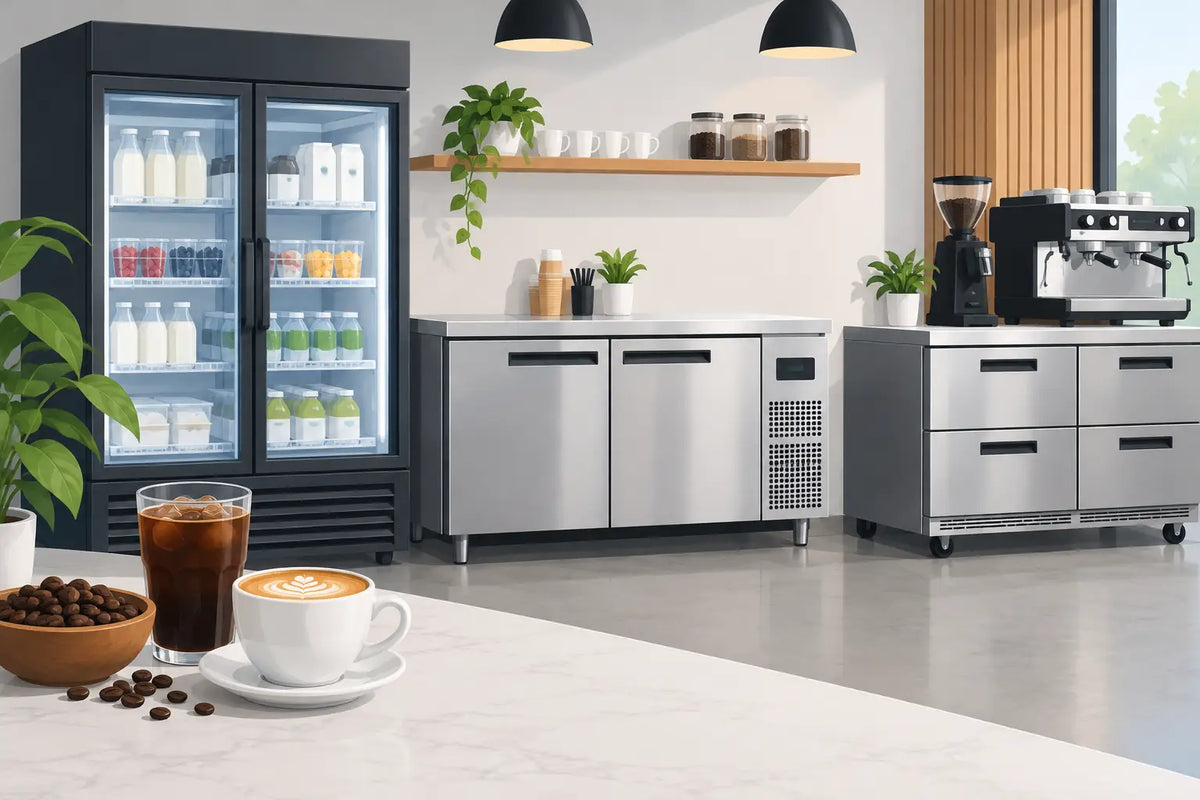
A perfectly pulled espresso can lose its appeal in seconds when the milk beside it is not properly chilled. Commercial coffee refrigeration equipment is the quiet foundation of a great beverage program, protecting freshness, supporting faster service, and helping every latte, iced coffee, and cold brew arrive exactly as intended.
For a café, office pantry, hotel breakfast station, or restaurant bar, refrigeration is not simply a storage decision. It shapes workflow, food safety, presentation, energy use, and the consistency guests remember. The right setup keeps your team focused on the rewarding part: serving rich, beautifully balanced coffee with confidence.
Why Commercial Coffee Refrigeration Equipment Matters
Milk is central to many of the world’s favorite coffee drinks. From a silky cappuccino to an indulgent iced latte, its flavor and texture depend on stable cold storage. When milk is held at the right temperature and within easy reach, baristas can work quickly without compromising quality.
Commercial units are built for the demands that household refrigerators are not. They are designed for frequent door openings, busy service periods, heavier product loads, and a professional workspace. The difference becomes clear during a morning rush, when a compact refrigerator that recovers temperature quickly can prevent delays and reduce unnecessary waste.
Refrigeration also protects the flavor of ready-to-serve cold brew, brewed tea, flavored syrups that require chilling after opening, whipped toppings, and dairy alternatives. Oat, almond, coconut, and lactose-free milks all have their own handling requirements, yet each benefits from a clean, stable, well-organized cold environment.
Choose the Right Commercial Coffee Refrigeration Equipment
There is no single best refrigerator for every coffee operation. The right choice depends on your menu, service volume, available counter space, and the role refrigeration plays in the customer experience.
Undercounter refrigerators for high-volume bars
An undercounter refrigerator is often the most practical choice for a café bar or restaurant coffee station. Installed beneath the work surface, it keeps milk, chilled beverages, and backup ingredients within one step of the espresso machine. This reduces movement behind the counter and gives the workspace a cleaner, more intentional look.
Look for adjustable shelves and a door configuration that suits your station. Solid doors are ideal when product storage matters most, while glass doors can make stock checks easier. For busy venues, separate compartments can help organize dairy, plant-based alternatives, and cold beverage ingredients without crowding.
Countertop milk refrigerators for simple service
Countertop milk refrigerators work well beside automatic coffee machines in offices, executive lounges, self-service stations, and smaller hospitality settings. They create a compact coffee system where guests can prepare café-style beverages with minimal training.
Capacity is the trade-off. A countertop unit saves space and keeps milk close to hand, but it may not hold enough backup stock for a high-traffic breakfast service. It is best suited to locations where convenience and a polished presentation matter more than bulk storage.
Display refrigerators for grab-and-go coffee
If your menu includes bottled cold brew, canned coffee, chilled ready-to-drink beverages, or bottled milk, a display refrigerator can turn refrigeration into a sales opportunity. Clear doors and thoughtful lighting help guests see what is available, encouraging quick add-on purchases without slowing the line.
Choose a unit that maintains a consistent temperature even when customers open the door regularly. A display fridge should feel premium and orderly, not overfilled. Group products by type and keep labels facing forward to make selection effortless.
Refrigerated bases for a complete beverage station
A refrigerated base paired with a worktop can be valuable for larger concepts that prepare cold foam, blended drinks, desserts, or made-to-order iced beverages. It provides storage and preparation space in one footprint, which is especially useful where back-of-house space is limited.
This option requires more planning than a small milk fridge, but it can make a growing beverage program easier to manage. Measure not only the equipment space, but also door clearance, ventilation requirements, and the working room your team needs during peak service.
Size Capacity Around Your Busiest Hour
A common mistake is buying refrigeration based on average daily use. Instead, plan for the busiest hour, plus enough reserve stock to avoid constant restocking. A quiet office may need space for a few bottles of milk and alternatives, while a hotel breakfast station may need rapid access to several varieties at once.
Start with your drink mix. If lattes and iced drinks dominate sales, milk capacity should lead the decision. If cold brew, bottled beverages, and grab-and-go items are central to the offer, shelf layout and display space may matter more.
Also consider delivery schedules. Frequent deliveries can support a more compact unit, while operations receiving stock only once or twice each week need more capacity. Bigger is not always better: an oversized refrigerator wastes energy and can make stock rotation harder. The goal is enough space for calm, efficient service without turning chilled ingredients into forgotten inventory.
Features That Support Better Coffee Service
Temperature performance should come first. In the United States, refrigerated dairy products are commonly held at 41°F or below, though every business should follow its local health code and product-specific guidance. A clear digital display makes daily checks easier, while alarms can alert staff if a door is left open or temperatures move outside the desired range.
Reliable airflow matters too. In a crowded refrigerator, blocked vents create uneven cooling, leaving some products colder than others. Choose a unit with a layout that allows air to circulate around containers, and avoid packing shelves so tightly that the system has to work harder.
Durable finishes, easy-clean interiors, and removable shelf components make a practical difference over time. Spills happen at coffee stations. A refrigerator that can be wiped down quickly supports a more hygienic operation and preserves the refined appearance guests expect.
Noise is another consideration, particularly for offices, hotel lounges, and open retail counters. A quieter unit contributes to a more relaxed coffee ritual. In a back bar with grinders, blenders, and dishwashers, sound may be less important than recovery speed and storage capacity.
Finally, review electrical requirements before purchasing. Confirm the available outlet type, circuit capacity, and clearance around the unit. Proper ventilation is essential for performance and longevity, and a refrigerator placed too tightly against a wall may use more energy while cooling less effectively.
Organize Refrigeration for Speed and Freshness
The best equipment still needs a disciplined routine. Store milk and dairy alternatives in clearly designated zones, with newly delivered items placed behind older stock. This first-in, first-out approach helps reduce waste and gives staff a simple system to follow.
Keep opened products labeled according to your operating procedures, and return milk to refrigeration promptly after use. During a rush, it can be tempting to leave several containers on the counter. That may seem faster in the moment, but it creates avoidable quality and food-safety risks.
A small opening and closing checklist is often enough: verify temperature, inspect seals, wipe spills, rotate stock, and check that vents are clear. These few steps protect the investment in your equipment and the quality of every cup served.
Energy Efficiency Is Part of a Better Coffee Future
Commercial refrigeration runs continuously, so efficiency deserves attention. Models with energy-saving components, well-fitted door seals, and appropriate insulation can help reduce operating costs over time. Selecting the right size also matters: storing a small amount of product in a large unit is rarely the most responsible choice.
Daily habits make a difference. Limit unnecessary door opening, keep condenser areas clean according to the manufacturer’s guidance, and avoid placing hot products directly into refrigerated storage. These practices support stable temperatures while reducing strain on the equipment.
For businesses building a more thoughtful coffee program, this is one practical expression of Brewing A Better Tomorrow. Fresh ingredients, lower waste, and efficient equipment can work together without taking attention away from flavor.
Build a Station Your Team Can Trust
Great coffee service feels effortless to the guest because the planning happens behind the counter. Choose commercial coffee refrigeration equipment that matches your menu and peak demand, then position it where your team naturally reaches for milk, cold brew, and chilled ingredients. When freshness is protected and every tool has its place, the final pour has more room to shine.