
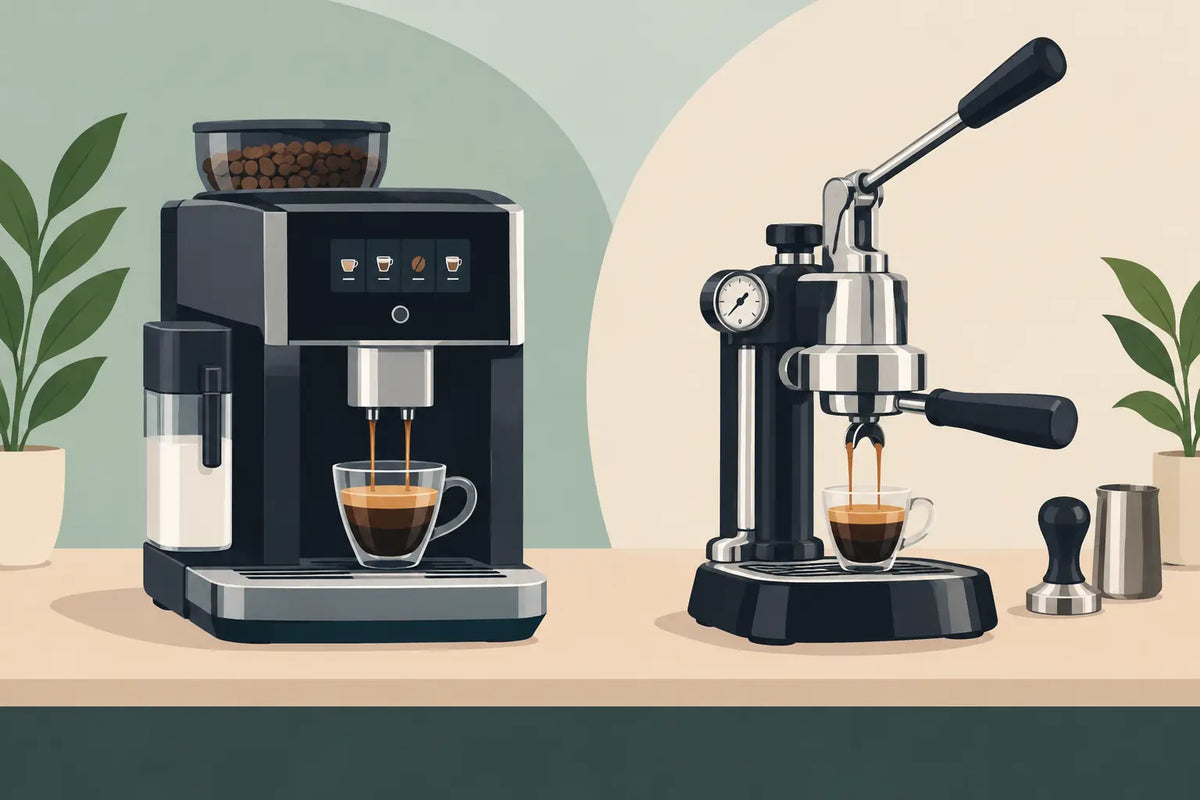
The difference between automatic versus manual espresso is not simply how a machine looks on the counter. It is the difference between pressing a button before a morning meeting and slowing down to measure, grind, tamp, and watch a rich stream of coffee form beneath the portafilter. Both can produce a beautiful espresso. The right choice comes down to how you want coffee to feel in your day.
For many homes, an automatic machine brings café-style consistency within easy reach. For coffee enthusiasts who enjoy the craft behind the cup, a manual setup turns brewing into a hands-on ritual. Neither approach is inherently better. The best machine is the one that delivers the flavor, pace, and level of control you will genuinely enjoy using.
Automatic Versus Manual Espresso at a Glance
Automatic espresso machines take on more of the work. Depending on the model, they may grind beans, measure the dose, brew the shot, froth milk, and clean key components with minimal input. This makes them particularly appealing for busy households, offices, and anyone who wants a reliable flat white, cappuccino, or espresso without needing barista training.
Manual espresso machines put more of the process in your hands. You grind the coffee, distribute it in the portafilter, tamp it evenly, start and stop extraction, and steam milk separately when desired. Some machines are semi-automatic, meaning they use an electric pump but leave dosing, tamping, and shot timing to you. Others are fully manual lever machines that require even more technique.
The distinction matters because espresso is sensitive. Small changes in grind size, dose, water temperature, and extraction time can shift a cup from bright and balanced to thin, bitter, or overly intense. An automatic machine reduces those variables. A manual machine lets you explore them.
Choose Automatic Espresso for Effortless Consistency
An automatic machine is built for the person who values excellent coffee without adding another demanding task to the morning. With fresh beans and the right settings, a bean-to-cup machine can produce a consistent espresso at the touch of a button, then help you build milk drinks with far less effort than a traditional setup.
This convenience is especially valuable when several people use the same machine. One person may prefer a short, intense espresso, another a long coffee, and another a cappuccino before heading out. Automatic programs make those preferences easy to repeat, even when the day starts early.
Consistency is another advantage. Automatic machines apply the same programmed recipe each time, which helps protect the character of a carefully selected coffee. A smooth medium roast can stay rounded and chocolatey. A more aromatic blend can retain its fragrance and clean finish. The result is less guesswork and fewer wasted shots.
Automatic machines also suit entertaining. When guests arrive, you can spend less time calibrating a grinder and more time enjoying the conversation. A machine with an integrated milk system can make the move from espresso to cappuccino or latte feel simple, polished, and generous.
There are trade-offs. Automatic machines generally offer less room to alter every part of extraction, and their internal brewing systems need regular rinsing and cleaning. Milk systems deserve particular attention, especially in warm climates where dairy should never be left sitting in tubes or containers. Follow the machine's cleaning prompts, empty the drip tray, and use filtered water where possible to support performance and flavor.
For offices and hospitality settings, the case for automation is even clearer. Speed, repeatability, and straightforward operation matter when coffee is served throughout the day. The goal is not to turn every employee into a barista. It is to offer a cup that feels considered, rich, and dependable every time.
Who will appreciate an automatic machine?
Choose automatic espresso if you want premium coffee with minimal effort, prepare several drinks a day, share the machine with family or colleagues, or prefer milk drinks without practicing steam-wand technique. It is also a smart choice if consistency matters more to you than experimenting with every variable.
Choose Manual Espresso for Greater Craft and Control
Manual espresso appeals to people who notice the details. The aroma released as beans are ground fresh. The quiet focus of leveling the coffee bed. The moment the first drops of hazelnut-colored espresso appear. For many coffee lovers, these steps are not obstacles. They are part of the reward.
A manual setup gives you direct control over dose, grind, yield, and extraction time. That control is useful when you buy different coffees or want to fine-tune a recipe. A darker roast may taste best with a slightly coarser grind and shorter yield. A lighter, more complex coffee may benefit from a different ratio and a little more time. With practice, you can bring out more sweetness, texture, and clarity from each coffee.
The equipment can also be more modular. You may pair a manual espresso machine with a high-quality standalone grinder, a precise scale, a tamper, and a milk pitcher chosen to suit your preferences. This creates room to upgrade over time rather than replacing one all-in-one system.
Yet manual espresso asks for patience. A capable grinder is essential, because espresso needs a very consistent, adjustable grind. You will need to learn how to dial in coffee when a shot runs too fast, tastes sour, or slows down and becomes harsh. Steaming glossy microfoam for latte art takes practice as well.
That learning curve can be deeply satisfying, but it is not for everyone. On a rushed weekday, the ritual may feel like too much. A manual machine is best when you can give it a few attentive minutes and when the process itself adds pleasure to your routine.
Who will appreciate a manual machine?
Choose manual espresso if you enjoy hands-on preparation, want to explore different beans and recipes, and are willing to practice. It is ideal for the home barista who sees espresso as a skill worth developing, not just a drink to check off before leaving the house.
Flavor Depends on Coffee and Care, Not Only the Machine
It is easy to assume manual espresso automatically tastes better because it offers more control. In reality, a well-maintained automatic machine using fresh, well-matched coffee can produce a cup that is far more enjoyable than a poorly dialed-in manual shot. Equipment matters, but coffee quality, water, cleanliness, and freshness matter just as much.
Start with coffee suited to your preferred drink. For a classic espresso or milk-based beverage, look for a blend with enough body to remain present through milk. If you enjoy espresso on its own, you may prefer nuanced notes that reveal themselves as the cup cools. Fresh whole beans are particularly rewarding for machines with grinders, while capsules offer a precise, convenient route to consistent flavor with very little preparation.
Keep your machine clean, regardless of style. Coffee oils build up over time and can mute sweetness or add stale flavors. Purge and wipe a steam wand after each use, clean removable parts as recommended, and descale according to your water conditions. These simple habits protect both the cup and the machine.
Consider Your Counter, Budget, and Daily Rhythm
Before choosing, picture a typical weekday rather than an idealized weekend. How many coffees will you make? Do you usually drink espresso, Americano, cappuccino, or latte? Will others expect to use the machine without instruction? Do you have room for a grinder, accessories, and a place to weigh and prepare coffee?
Automatic machines can have a higher upfront price, particularly bean-to-cup models with integrated milk functions, but they consolidate equipment and simplify the process. Manual machines vary widely in price, although a complete setup should include the cost of a quality grinder and essential tools. A lower-priced manual machine paired with an inconsistent grinder can become frustrating quickly.
There is also a middle path. A semi-automatic machine offers the tactile satisfaction of grinding, tamping, and pulling a shot, while its pump handles pressure reliably. Capsule machines offer another practical option for households that prioritize speed, portion control, and a compact footprint. Café Royal's coffee system approach recognizes that a premium ritual can be hands-on or effortless, as long as the cup delivers rich, authentic flavor.
Let Your Ideal Coffee Moment Decide
If your best coffee moment is a calm Saturday morning, a manual machine can give that time more texture and intention. If it is a perfectly made cappuccino between school runs, calls, or guests arriving at the door, automation may be the more luxurious choice because it gives time back.
Choose the machine that makes you want to use it tomorrow. Fill it with coffee you are excited to smell, maintain it with care, and let each cup become a small, satisfying pause in the rhythm of the day.