
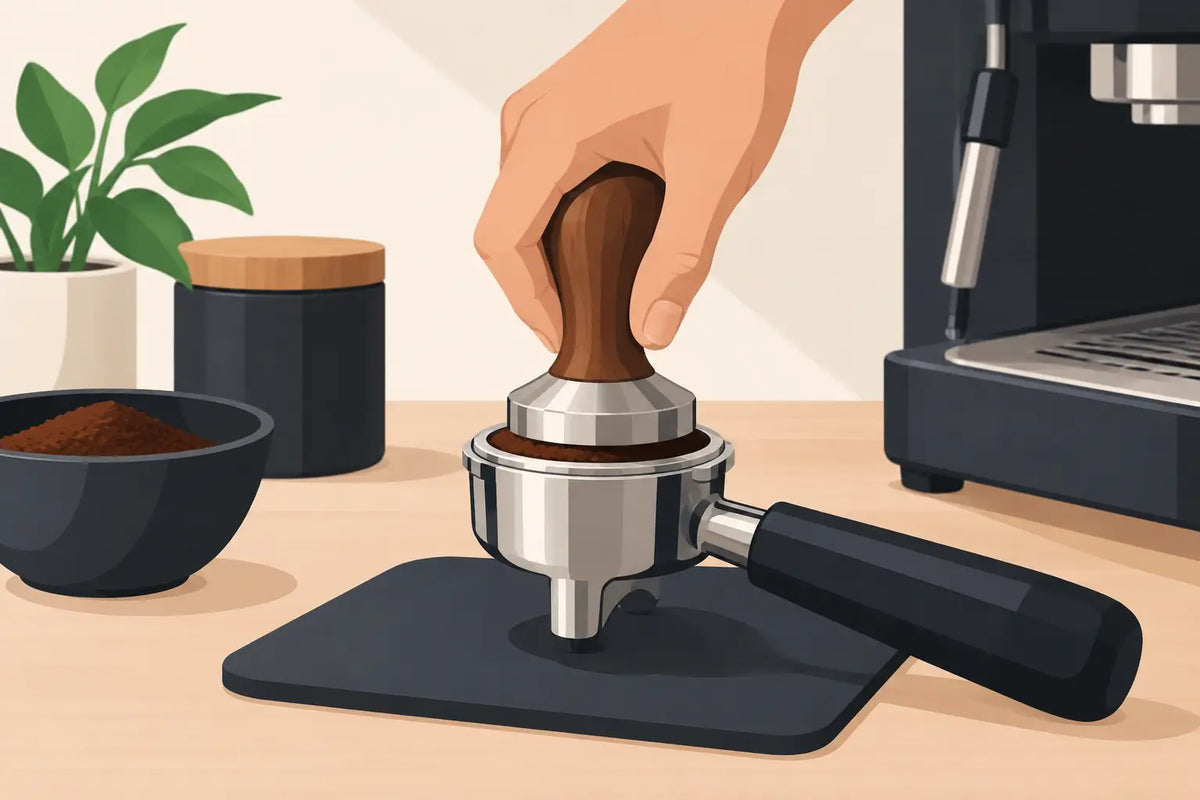
A beautifully prepared espresso can lose its balance before the machine is even switched on. If the coffee bed is uneven or loosely packed, water will find the easiest route through it, producing a shot that tastes thin, sour, bitter, or all three. Learning how to use a coffee tamper gives your espresso a cleaner, richer foundation - and makes every carefully chosen bean work harder in the cup.
For home coffee rituals, entertaining, or a polished office setup, tamping is a small step with an unmistakable effect. It is not about force or complicated barista theater. It is about creating an even coffee bed so pressurized water moves through the grounds at a controlled pace.
What a Coffee Tamper Does
A coffee tamper compresses ground coffee inside the portafilter basket before extraction. This creates a level, compact puck with enough resistance to help the espresso machine build pressure.
Without tamping, water can rush through pockets of loose coffee. With too much force, you may make your workflow tiring without improving the shot. The goal is a firm, level puck, not a puck pressed with maximum strength.
A tamper should closely match the diameter of your basket. A poorly fitted tamper can leave an untamped ring of coffee around the edge, where water may flow too quickly. For many home machines, a 58 mm tamper is common, but basket sizes vary. Check your portafilter before choosing an accessory.
Before You Tamp: Set Up the Coffee Bed
Tamping cannot correct an uneven dose. Start with fresh coffee grounds, a clean and dry portafilter basket, and a dose suited to that basket. If you use whole beans, grind immediately before brewing for the most expressive aroma and flavor.
Dose consistency matters more than chasing a particular number. Your basket may perform best with 18 grams, 20 grams, or another amount specified by its manufacturer. A digital scale makes this repeatable, particularly when you are dialing in a new coffee. Once you find the dose that suits your machine and preferred flavor, keep it stable while adjusting the grind.
After adding the grounds, distribute them evenly before reaching for the tamper. You can gently tap the side of the portafilter, use a distribution tool, or lightly level the grounds with a finger. Avoid knocking the portafilter hard against the counter. It can create cracks or pockets in the coffee bed.
The surface does not need to look perfect, but it should be broadly level. This is where an excellent extraction begins.
How to Use a Coffee Tamper Step by Step
Place the portafilter on a stable tamping mat, counter edge, or purpose-built tamping station. Keep it supported and level. A soft mat protects both the portafilter and your countertop while giving you a steadier working surface.
Hold the tamper so its base rests flat on the coffee. Your wrist should stay straight rather than bent. Place your fingers around the tamper base to feel whether it is sitting level, and position your elbow above the portafilter as you apply pressure.
Press down smoothly and evenly. A commonly suggested benchmark is around 20 to 30 pounds of pressure, but you do not need to measure this every morning. Think of a firm, controlled press that compacts the grounds fully without straining your shoulder or wrist. Once the coffee stops compressing easily, additional force rarely transforms the extraction.
Release the pressure without twisting aggressively. A light polishing twist at the end is optional, but it is not necessary. In fact, a forceful spin can disturb the puck edges and create the very channels you are trying to prevent.
Lift the tamper straight up and inspect the surface. It should look smooth and level, with no major cracks, loose edges, or visible slope. Wipe away loose grounds from the rim of the basket before locking the portafilter into the machine. Grounds left on the rim can compromise the seal and make cleanup harder.
Brew as soon as possible. The longer a prepared puck sits exposed, the more its surface can dry out and the less predictable the extraction may become.
Pressure Matters Less Than Levelness
Many new espresso drinkers focus on finding the exact tamping pressure. In practice, repeatability is more valuable than a precise number. If you tamp with the same firm pressure each time, you can more clearly see whether the grind, dose, or yield needs adjustment.
A level tamp is essential because water under pressure is highly efficient at finding weak points. If one side of the puck is lower, water tends to favor that side. This is called channeling, and it can leave the espresso sharp and underdeveloped even when the shot time appears correct.
If your shots vary from one attempt to the next, look first at distribution and levelness. Only then consider whether your tamp is too light. Most home baristas benefit more from a consistent prep routine than from pressing harder.
A Comfortable Tamping Position
Set your tamping surface near waist height when possible. This lets you press downward with a relaxed posture instead of forcing your wrist at an awkward angle. In a busy office or hospitality setting, a dedicated tamping station also protects counters and keeps the workflow tidy.
If you feel wrist discomfort, review your technique and the tamper handle. A well-balanced tamper should feel secure in the hand. There is no prize for a dramatic, heavy-handed press.
Read the Espresso, Then Make One Change
Tamping is one part of a connected espresso recipe. The coffee, grind size, dose, water, machine temperature, and final beverage size all shape what reaches the cup. When a shot is not tasting its best, change one variable at a time.
If espresso runs very quickly and tastes watery or sour, the grind may be too coarse, the dose may be low, or the coffee bed may have been unevenly prepared. First, make sure your distribution and tamp are level. If they are, try grinding a little finer.
If espresso drips slowly, tastes harsh, or produces a very small yield, the grind may be too fine or the dose may be too high for the basket. A lighter tamp is rarely the best solution, because it introduces inconsistency. Keep your tamp steady and adjust the grind in a small increment instead.
A scale and timer make this process far more intuitive. For example, if you use 18 grams of coffee, you might begin by aiming for roughly 36 grams of espresso in the cup, then taste and refine from there. Some coffees shine with a shorter, more intense yield; others reveal a sweeter, rounder character when brewed slightly longer.
Common Tamping Mistakes to Avoid
The first mistake is tamping unevenly. Check the angle of the tamper before pressing, not after. A slight tilt at the start is easier to prevent than to correct.
The second is tamping over loose, clumped grounds. Even pressure cannot reach evenly through a coffee bed that has not been distributed. Take a few seconds to level the dose first.
The third is treating tamping as the answer to every extraction problem. When your espresso changes dramatically, freshness and grind size are usually more influential. Tamp well, then let the flavor guide your next adjustment.
Finally, do not tamp coffee capsules or coffee pads. These formats are already portioned and designed for their compatible machines. A tamper is for ground coffee prepared in an espresso portafilter. Café Royal offers coffee formats for different brewing preferences, so choosing the right preparation method is part of achieving the intended result.
Keep Your Tamper and Station Clean
Coffee oils build up over time, even on a simple accessory. Wipe the tamper base after use and clean it regularly with a soft cloth. Keep the basket dry before dosing, since moisture can cause grounds to cling unevenly to the sides.
A clean portafilter, fresh coffee, and an orderly station make the ritual feel easier, especially during a busy morning. They also make it simpler to spot what changed when an espresso tastes different than expected.
The best tamp is the one you can repeat without thinking: evenly distributed grounds, a level base, a firm press, and a clean lock-in. Give that small moment of care to each shot, and your machine has the right conditions to turn rich coffee into the espresso you were looking forward to.