
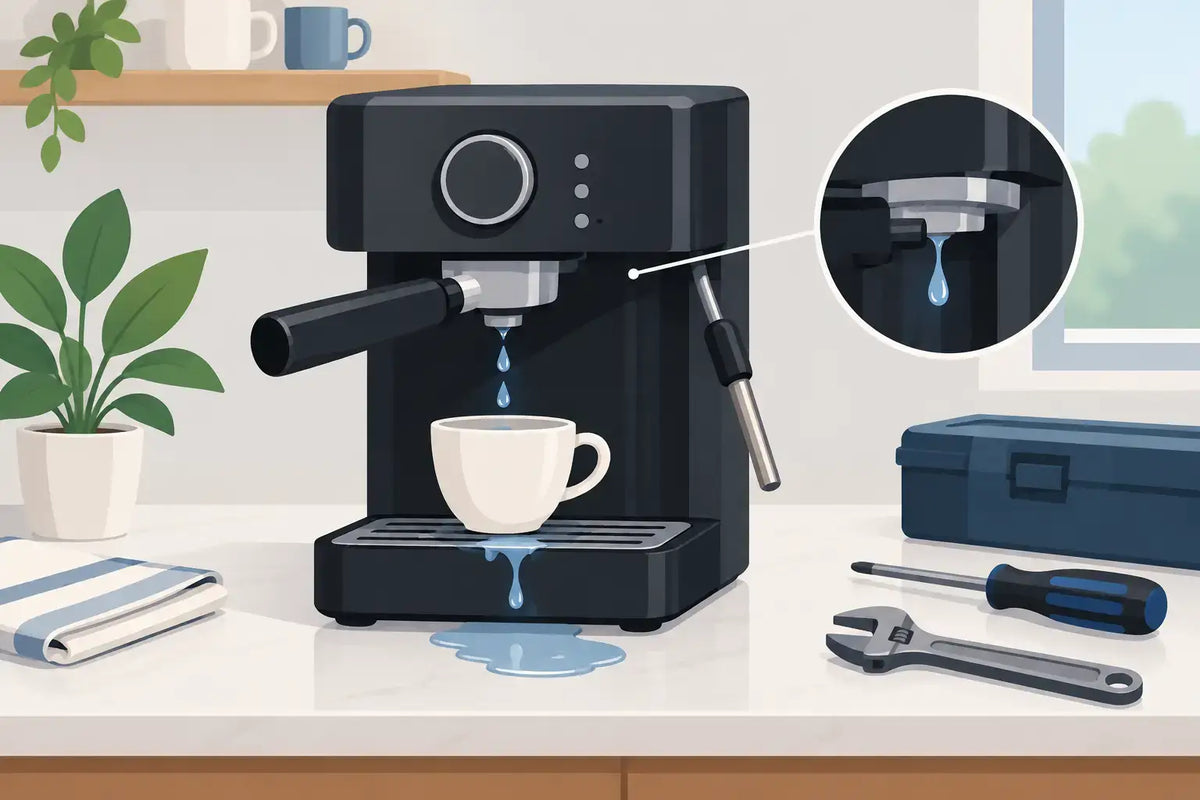
A small puddle beside your machine can turn a peaceful espresso moment into an unwelcome interruption. Coffee machine leaks are often caused by something simple, such as an overfilled drip tray or a poorly seated water tank, but the location and timing of the leak matter. Catching the cause early protects your countertop, your machine, and the quality of every cup.
Before attempting a fix, switch the machine off, unplug it, and allow it to cool. Never investigate water near a powered appliance. Once it is safe, dry the exterior thoroughly so you can see exactly where fresh water appears during the next use.
First, Find Where the Water Is Coming From
The fastest route to a solution is to identify when the leak happens. Does water appear while the machine is sitting idle, when the tank is filled, during brewing, or after the coffee has finished pouring? Each pattern points to a different component.
Water underneath the machine often comes from the tank, its valve, or an internal connection. Water at the front usually relates to the drip tray, capsule area, group head, or a full used-capsule container. A leak that appears only while brewing may be linked to a worn seal, blocked outlet, excess pressure, or a capsule that is not sitting correctly.
Wipe the machine dry, place it on a clean paper towel, and run a short water cycle without coffee if your model allows it. This makes the path of the water easier to trace. Do not remove panels or attempt to reach internal tubing unless you are qualified to service the appliance.
Common Coffee Machine Leaks and Simple Fixes
The drip tray is full or not fitted correctly
The drip tray collects rinse water, coffee drips, and moisture released after brewing. It can fill faster than expected, especially in a busy home, office pantry, or guest setting where the machine is rinsed frequently.
Remove the tray, empty it, wash it with warm water, and dry both the tray and the cavity beneath it. Slide it back into place firmly. If the tray is cracked, warped, or does not sit level, it may allow water to escape around the edges and should be replaced.
The water tank is not seated or has a damaged valve
Many machines use a small spring-loaded valve at the base of the water tank. When the tank is properly seated, the machine opens this valve to draw water. If the tank is slightly misaligned, if its seal is dirty, or if the valve is worn, water can drip down the back or pool beneath the machine.
Lift out the tank and inspect its underside for cracks, mineral buildup, and debris around the valve. Rinse it, wipe the connection point, and refill only to the maximum line. Refit the tank slowly and evenly. If it continues to leak while resting on the counter, the tank or valve likely needs professional assessment or replacement.
Water escapes around the coffee outlet or capsule area
When water comes from around the brewing chamber rather than through the spout, the cause is often a capsule, a seal, or coffee residue. A capsule that is bent, damaged, incorrectly positioned, or incompatible with the machine can prevent the chamber from closing cleanly. The pressure then finds another route.
Open the machine only once it has cooled, remove the used capsule, and clean visible grounds or residue from the capsule holder and coffee outlet using a soft, damp cloth. Avoid sharp tools, which can damage the puncture plate or gasket. Then use a fresh capsule that is designed for your machine system and close the lever completely without forcing it.
If the problem happens with several fresh capsules, the brewing seal may be worn. This is a service issue rather than a reason to apply more pressure to the lever.
Mineral buildup is restricting water flow
Hard water leaves mineral deposits inside water pathways over time. That buildup can reduce flow, create unusual pressure, and send water toward joints that normally remain dry. You may also notice slower brewing, reduced cup volume, a louder pump, or a less satisfying crema before a leak becomes obvious.
Follow your machine's recommended descaling process and use a descaler approved for coffee equipment. Vinegar is not a universal substitute. Its acidity, odor, and residue can be unsuitable for some machines, particularly models with sensitive internal parts. After descaling, run the required rinse cycles until the water is completely clear.
Regular descaling supports more than machine cleanliness. It helps preserve the even extraction that allows rich aroma, balanced body, and the full character of a premium coffee to come through in the cup.
The machine is leaking after brewing, not during it
A few drops after a coffee cycle can be normal. Many capsule and automatic machines release residual water into the drip tray after brewing, and steam-based machines may release condensation as they cool. The difference is volume. A few drops collected neatly in the tray are expected; a spreading puddle beneath the machine is not.
Check whether the drip tray is inserted, whether the used-capsule container is overflowing, and whether the machine is standing level. A machine tilted even slightly forward can make ordinary drainage look like a leak.
A Safe Check Before You Call for Service
For a practical first inspection, work through these four checks: empty and reseat the drip tray, clean and refill the water tank below its maximum line, remove coffee residue from the brewing area, and complete a manufacturer-approved descaling cycle if the machine is due for one.
Then test the machine with water first, followed by one coffee. Observe it closely from the side and back rather than moving it mid-cycle. If the leak stops, continue with a simple care routine: empty the drip tray regularly, wipe the capsule area, use clean water, and descale on schedule.
Do not continue testing if water is reaching the power cord, outlet, control panel, or any electrical connection. Unplug the machine immediately and arrange professional service.
When a Coffee Machine Leak Needs Professional Help
Some leaks are not suitable for a home fix. A split hose, damaged internal connector, failed pump seal, cracked boiler component, or electrical fault requires proper diagnostics. Trying to open a machine yourself can create a safety risk, compromise performance, and may affect warranty coverage.
Arrange service if you see any of the following: water leaking from the base despite a correctly fitted tank and empty drip tray, recurring leaks after cleaning and descaling, steam escaping from an unusual location, a burning smell, inconsistent pressure, or a machine that trips power. The same applies if the water is discolored or if coffee is leaking inside the housing rather than into the cup.
For workplaces and hospitality settings, respond quickly. A small leak can interrupt service, damage cabinetry, and create a slip hazard in a high-traffic beverage area. Keeping a second brewing solution available during service can protect the coffee experience your team and guests expect.
If you own a Café Royal machine, keep your purchase details and machine information available when contacting support. Clear photos of the leak location, along with a note of when it occurs, can help the service team assess the issue efficiently.
Prevent Leaks Through Everyday Care
A coffee machine is designed to make convenience feel refined, but it still benefits from a few calm moments of care. Empty the drip tray before it reaches the limit, never overfill the tank, and use capsules or coffee formats suited to your specific machine. After a busy morning or an evening of entertaining, wipe away splashes around the tank connection and brewing area rather than letting moisture sit unnoticed.
Descale according to your water conditions and the machine's guidance. In homes with harder water, the interval may be shorter. In lower-use settings, routine cleaning still matters because coffee oils and fine grounds can build up even when the machine is not used every day.
A dry countertop and a clean, steady brew are small details, yet they make space for what matters most: the first aroma in the morning, the comfort of a perfectly prepared cup, and a coffee ritual that feels effortless again.